Types of t-shirt printing methods compared

“I heard silkscreen printing is the best!” a customer once told us while planning her class tees. The truth is that no single method wins every time. The right choice depends on your design, quantity, fabric and budget. Below, we break down the main types of t-shirt printing we use, what each one does best, and how to pick the right one when ordering t-shirt printing in Singapore.

Quick Answer: Which Printing Method Should You Use?

For most orders, the decision comes down to what you are printing and how many pieces you need:

  • 20 pieces or more with a simple design: choose silkscreen printing.
  • Individual names and numbers, or just a few pieces: choose heat transfer vinyl.
  • Full-colour, detailed artwork in small quantities: choose DTF printing.
  • Designs that cover the whole shirt, such as sports jerseys: choose sublimation printing.
  • A premium logo on polos, caps or uniforms: choose embroidery.

What to Decide Before You Choose a Method

Before you compare methods, get clear on these five points. They affect the price and the finish more than anything else.

  • Quantity: some methods have setup costs that only pay off at higher volumes.
  • Number of colours: silkscreen costs rise with every extra colour, while digital methods cost the same however many colours you use.
  • Design size and placement: a chest logo, an A3 back print and an all-over design each suit different methods.
  • Fabric: cotton, dri-fit and polyester blends react differently to ink, heat and dye.
  • Personalisation: names and numbers need a method that can change from shirt to shirt.

The Main T-Shirt Printing Methods Explained

Silkscreen Printing

Silkscreen printing pushes ink through a fine mesh screen, using one screen for each colour. It produces bright, solid colours and one of the most durable finishes available, which is why it remains the go-to choice for class tees, event shirts and company runs. You can read more about how the technique works in this overview of screen printing.

Silkscreen works best when your order meets these conditions:

  • At least 20 pieces per design
  • A limited number of colours, since cost depends mostly on colour count
  • A print area within A3 (30 x 42 cm)
  • Only a few print positions, because each position (left sleeve, chest, back) needs its own screen
Silkscreen printing on a pink Girl Guides t-shirt
Silkscreen printing

Heat Transfer Vinyl Printing

Heat transfer printing cuts your design from coloured vinyl and presses it onto the shirt with heat. Many people call it “sticker printing”. Because each piece is cut separately, it suits one-off shirts, small orders and jersey name and number printing.

Heat transfer prints usually peel for three reasons: low-quality vinyl, too little heat during pressing, or a fabric that does not suit vinyl. A good printer controls all three. To help the print last, avoid warm water, never iron over the print and skip the dryer.
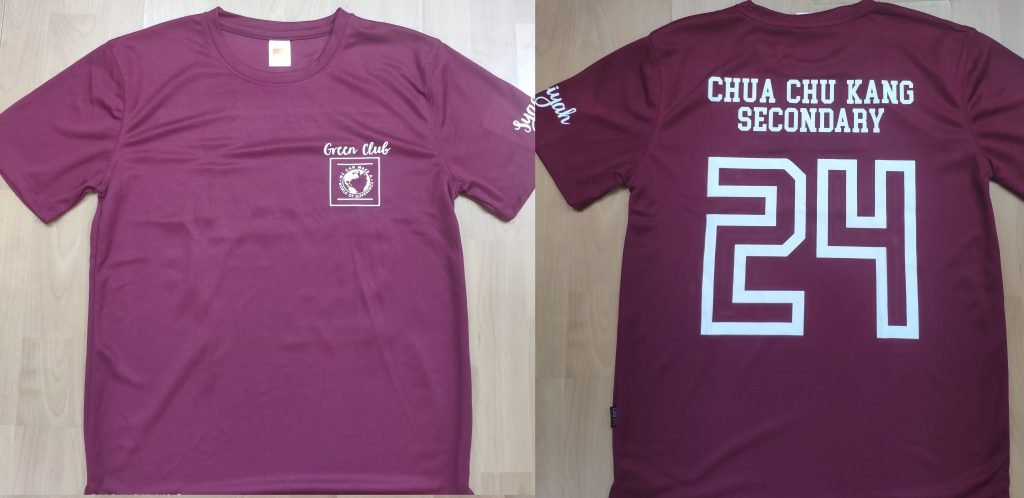
Heat transfer printing of a name and number on a maroon school t-shirt
Heat Transfer printing

DTF (Direct-to-Film) Printing

DTF printing prints your design onto a special film, coats it with adhesive powder and heat-presses it onto the shirt. It handles full-colour artwork, gradients and fine lines with ease, and it works on cotton, polyester and blends. With no screens to set up, it is a strong choice for small to medium runs of detailed designs, such as multi-colour logos with small text.

Sublimation Printing

Sublimation turns special ink into a gas that bonds with polyester fibres, so the design becomes part of the fabric instead of sitting on top. The result will not crack or peel, and it can cover the entire shirt from sleeve to sleeve. That makes it the top choice for sports jerseys and all-over designs, and we start sublimation orders at just 5 pieces. The trade-off is that it only works on polyester or dri-fit fabric, not cotton.
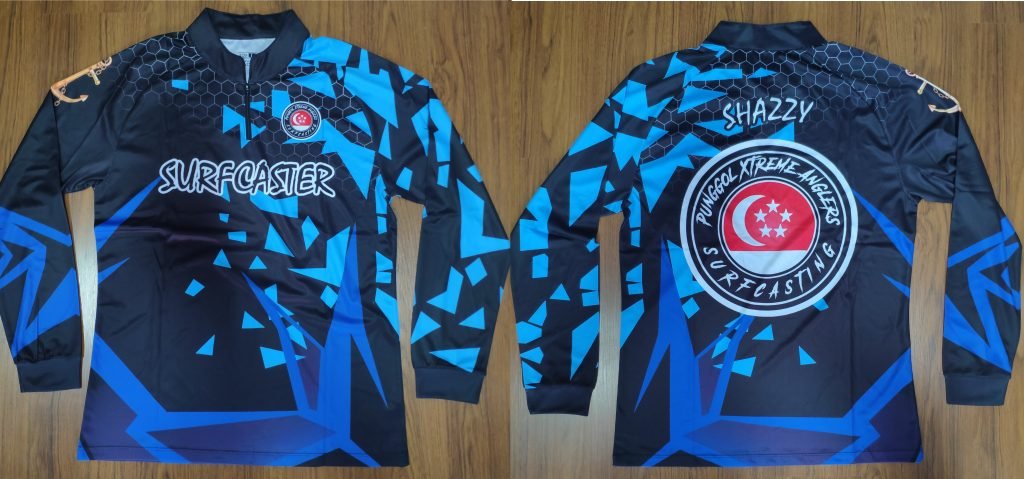
Types of t-shirt printing: sublimation on custom long-sleeve fishing jerseys
Sublimation printing

Embroidery

Embroidery stitches your logo into the fabric with thread. It looks premium, lasts for years and suits polo shirts, caps, jackets and corporate uniforms. It works best for small logos and text rather than large or highly detailed artwork. See our t-shirt embroidery service for available options.

DTG (Direct-to-Garment) Printing

DTG prints straight onto the shirt with an inkjet-style printer. It gives detailed results on cotton, but the high cost and weaker wash durability mean few local printers use it for everyday orders. If a vendor quotes DTG for a very cheap order, ask whether they are actually using heat transfer paper, which tends to fade after a few washes.

How the Methods Compare at a Glance

  • Most durable: sublimation and silkscreen
  • Best value for bulk orders: silkscreen
  • Best for 1 to 10 pieces: heat transfer vinyl and DTF
  • Best for full-colour detail: DTF and sublimation
  • Best for all-over designs: sublimation
  • Most premium look: embroidery

Which Method Suits Your Project?

  • Class and CCA tees: silkscreen for the main design, with heat transfer names if each student wants their own.
  • Sports teams: sublimation jerseys with names and numbers added by heat transfer or sublimation.
  • Corporate events and uniforms: silkscreen for event tees and embroidery for staff polos.
  • Small brands and merchandise drops: DTF for detailed, full-colour designs in smaller batches.
  • One-off gifts: heat transfer vinyl or DTF.

Make Your Print Last Longer

Whichever method you choose, how you wash the shirt affects how long the print lasts. Turn shirts inside out, wash them in cold water, avoid bleach and let them air-dry instead of using a dryer. For method-by-method advice, read our guide on taking care of your printed t-shirts.

Not Sure Which Method to Choose?

Send us your design, quantity and preferred fabric, and our team will recommend the method that gives you the best result for your budget. We handle class, corporate and sports orders every week, so we can help you get your t-shirt printing in Singapore right the first time. Request a quote for custom t-shirt printing.

Frequently Asked Questions

Which t-shirt printing method lasts the longest?

Sublimation lasts the longest because the dye becomes part of the polyester fabric, so it cannot crack or peel. Silkscreen is a close second and, with proper care, usually outlives the shirt itself.

What is the cheapest printing method for small orders?

For 1 to 10 pieces, heat transfer vinyl is usually the most affordable because it needs no screens or setup. For detailed full-colour designs in small quantities, DTF often gives better value. Of all the types of t-shirt printing, silkscreen only becomes the cheapest once you order around 20 pieces or more.
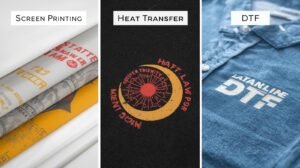
Printing Methods Compared

When it comes to custom apparel in Singapore, choosing the right printing method is one of the most important decisions for both businesses and individuals. From corporate uniforms and promotional shirts to personalised tote bags and event merchandise, the method you select can affect not only the design quality but also durability, comfort, and overall cost. Three popular methods dominate the market today: screen printing, heat transfer, and direct-to-film (DTF) printing. Each has its strengths and limitations, and understanding them can help you make the right choice for your project.

Screen Printing for apparel printing

Understanding Screen Printing

Screen printing is one of the oldest and most trusted methods of apparel decoration. In this process, ink is pressed through a fine mesh screen onto the fabric. Each colour in a design requires its own stencil and screen, which makes it best suited for designs with fewer colours and larger print runs.

The major advantage of this method is its durability. The thick layers of ink bond strongly with the fabric, resulting in vibrant colours that can withstand frequent washing. This makes it a popular option for uniforms, corporate wear, and large event t-shirts where longevity is essential. Another benefit is the colour vibrancy, as the inks used are highly pigmented and create bold finishes on both light and dark fabrics.

However, there are some drawbacks. Complex designs with gradients or fine details are difficult to reproduce. Since each colour requires an additional screen, costs can increase significantly for multi-coloured designs or smaller orders. For this reason, many smaller businesses and individuals in Singapore turn to other methods for short runs or intricate graphics.

Heat Transfer Printing for apparel printing

The Rise of Heat Transfer Printing

Another common option is heat transfer, which involves using heat and pressure to bond a design onto fabric. One form of this is heat transfer vinyl, where a design is cut out from coloured vinyl sheets and pressed onto the garment. This method allows for precise shapes, lettering, and solid colour blocks.

The benefit of heat transfer vinyl is the ability to produce sharp and accurate designs without needing multiple screens. It works well for short runs, customised names or numbers on jerseys, and promotional items. It is also a versatile method that can be applied to different fabric types, making it appealing for small businesses or one-time event apparel in Singapore.

That said, this process comes with limitations. The vinyl layer sits on top of the fabric, which may feel heavier compared to ink-based methods. Over time, the edges of the vinyl may peel, particularly with frequent washing or if applied improperly. While modern materials have improved durability, it typically does not match the lifespan of traditional screen printing.

DTF Printing for apparel printing

Direct-to-Film (DTF) Printing

Direct-to-film printing is a newer technology that has quickly become popular in the custom printing industry. In this process, designs are digitally printed onto a special film using high-quality inks. The film is then coated with an adhesive powder and transferred onto the garment using heat.

One of the biggest strengths of DTF is its ability to handle full-colour designs, gradients, and complex details with ease. It combines the benefits of digital printing with the flexibility of heat application, allowing for vibrant and durable prints. Unlike heat transfer vinyl, DTF designs feel lighter and more breathable because the ink bonds into the fabric rather than sitting on top as a solid layer.

For businesses and individuals in Singapore, DTF offers flexibility in order size. Whether you need a single shirt or a batch of 100, the process is efficient and does not require the setup costs of screen printing. It is also suitable for a wide range of fabrics, from cotton to polyester blends, which adds to its versatility.

Where Does Sublimation Printing Fit In?

While comparing methods, it is important to touch on sublimation printing as well. This technique uses heat to turn special inks into gas, which then bonds with polyester fibres. The result is a print that becomes part of the fabric itself, creating a smooth, breathable finish that will not crack or peel.

Sublimation printing produces outstanding colour quality and is perfect for all-over prints and vibrant graphics. However, it has one major limitation—it only works on polyester fabrics or polyester-coated surfaces. For businesses in Singapore looking to print on cotton apparel, this may not be the ideal solution.

Choosing the Right Printing Method in Singapore

The best printing method depends on your design, budget, fabric, and intended use. If you require long-lasting prints for uniforms or bulk orders, screen printing remains the strongest choice. For short runs or personalised designs like names and numbers, heat transfer vinyl offers excellent flexibility. If your project involves full-colour, detailed graphics with no minimum order requirements, DTF printing provides the most modern and versatile solution. For polyester-based products like sportswear or promotional items, sublimation printing creates vibrant, long-lasting results.

In Singapore, where customised apparel is a growing trend for corporate branding, school events, and personal expression, understanding these methods allows you to make a well-informed choice. By weighing the strengths and weaknesses of each, you can ensure your printed products look professional, feel comfortable, and last as long as you need them to.

Conclusion

Custom apparel printing has evolved significantly, with each method offering unique advantages. Screen printing continues to deliver unmatched durability for bulk orders, while heat transfer vinyl remains a reliable option for custom names, numbers, and smaller runs. DTF printing is reshaping the industry by combining the vibrancy of digital design with the versatility of heat transfer. And for polyester apparel, sublimation printing provides a premium option with flawless colour results.

Whether you are a business in Singapore creating branded merchandise, a school preparing for an event, or an individual wanting personalised apparel, selecting the right method ensures you get the best results for your needs. PrinteeSG provides expert guidance and quality printing solutions, helping you make the most out of your custom designs.

Frequently Asked Questions

Is DTF better than screen printing?

It depends on your project. DTF is excellent for detailed, full-colour designs and smaller order sizes because it does not require expensive setup. Screen printing, on the other hand, is more cost-effective for bulk orders and produces extremely durable prints.

What is the difference between sublimation and heat transfer?

Sublimation printing bonds ink directly into polyester fibres, making the design part of the fabric. It results in vibrant, long-lasting prints but works only on polyester. Heat transfer vinyl applies a cut vinyl layer onto the garment, which works on a wider range of fabrics but may peel or feel heavier over time.

Which printing method lasts the longest?

Screen printing generally lasts the longest because of its thick ink layers and strong bond with fabric. With proper care, screen-printed garments can outlast those made with heat transfer or DTF.

Can I use sublimation on cotton t-shirts?

No, sublimation printing does not work on 100% cotton fabrics. It only bonds with polyester or polyester-coated materials. For cotton shirts, DTF or screen printing are better options.

Is heat transfer vinyl good for sportswear?

Yes, heat transfer vinyl works well for adding names, numbers, and logos on jerseys and sportswear. However, for high-performance wear that requires breathability and durability, sublimation or DTF may be better choices.

Which method is most cost-effective in Singapore?

For large orders, screen printing is typically the most cost-effective. For smaller orders or customisations, heat transfer vinyl and DTF are better suited. Sublimation is best for polyester sportswear and all-over prints, though it may cost more depending on design complexity.

Enquire Now